Why this article exists
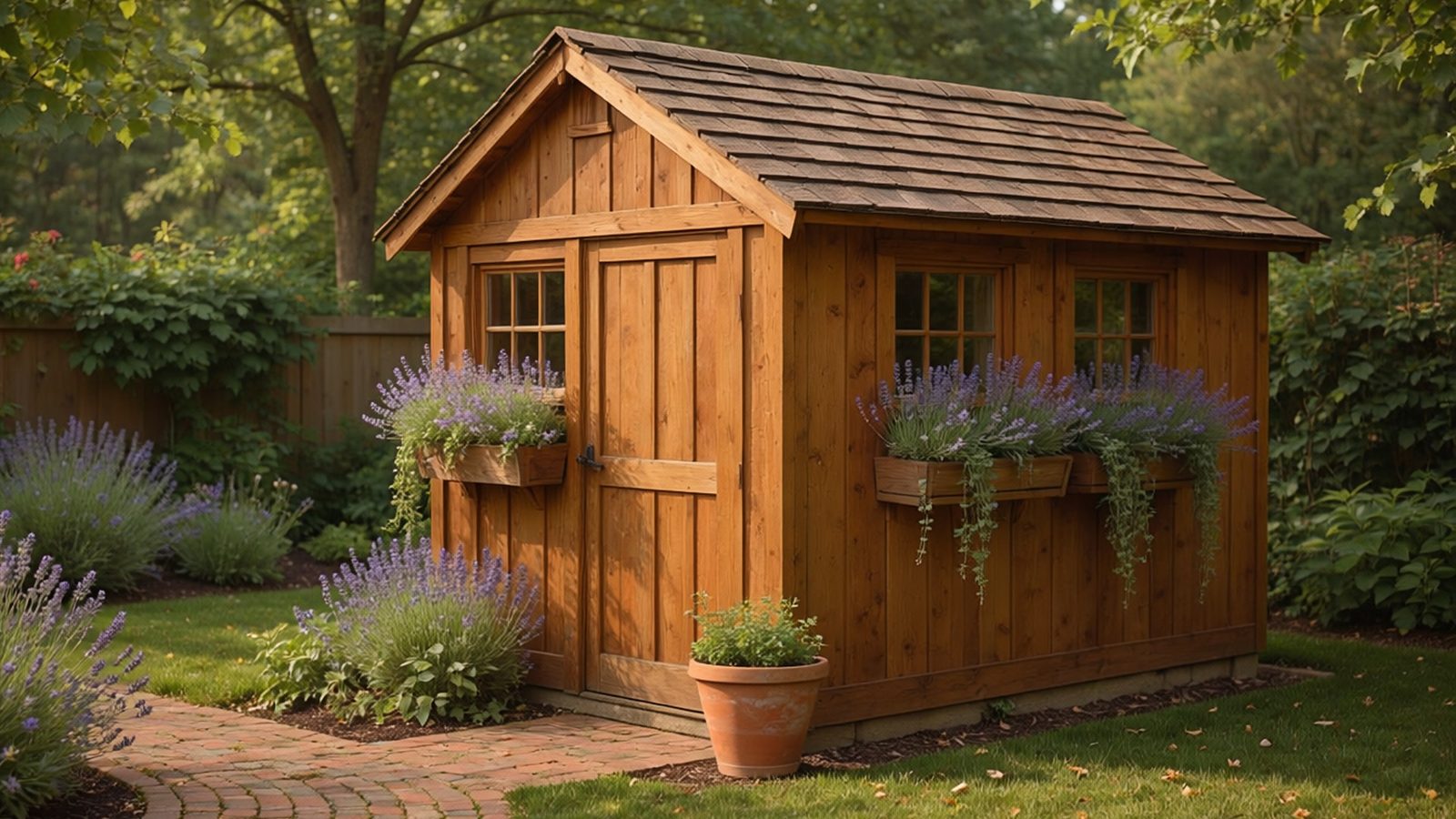
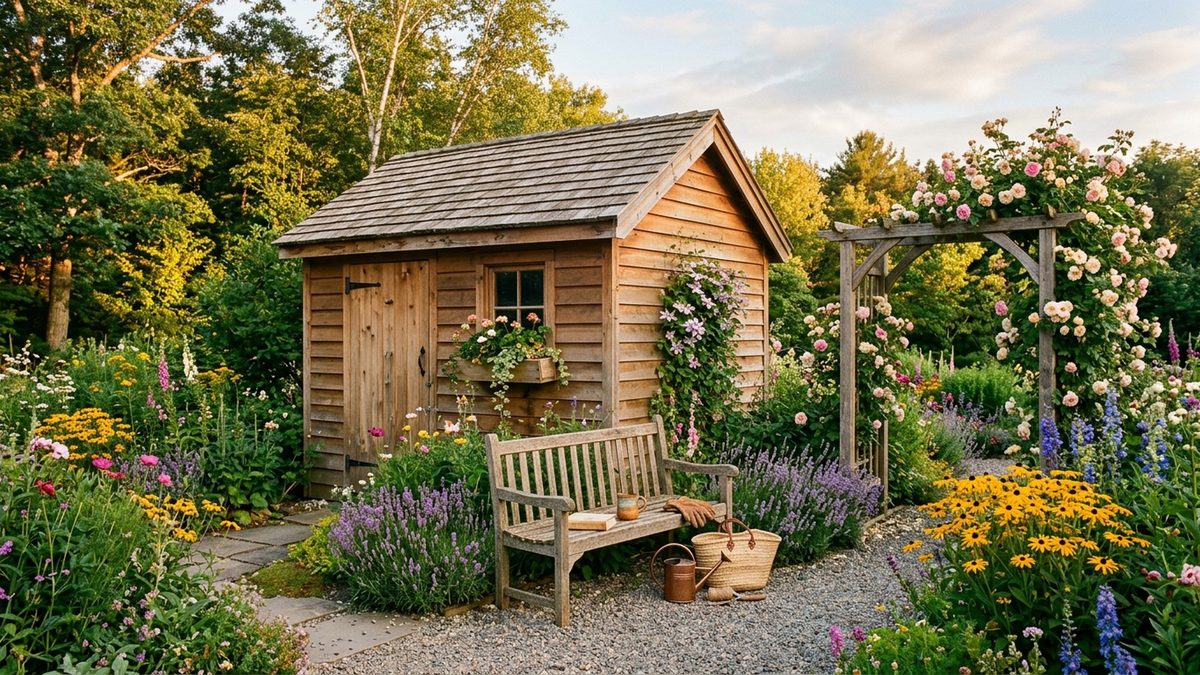
If you've spent any time dreaming about a backyard shed, cedar probably showed up early. It's the material of Architectural Digest garden features, the Canadian kit catalogs with the impossibly warm honey-brown photography, the Pinterest boards full of she-sheds and writer's cabins and potting rooms with window boxes. Cedar has a romance no other shed material can touch, and that romance is earned — the wood genuinely is beautiful, genuinely does smell incredible, genuinely does contain natural oils that fight rot and insects in ways synthetic materials can't match.
What the romance leaves out is everything that happens after the first year. The graying. The staining cycle. The fact that in most of America the gorgeous honey tones you saw in the catalog are gone within twelve to eighteen months. The fact that the three biggest "cedar shed" brands all ship their kits across a border that now carries a forty-five-percent lumber tariff. The fact that the framing inside most "cedar sheds" isn't cedar at all — it's thin spruce-pine-fir framing that the manufacturer hopes you'll never notice. The fact that the one-year warranty on an eight-thousand-dollar kit is shorter than the warranty on the plastic shed your neighbor bought at Costco for nine hundred bucks.
None of this means cedar is a bad choice. Cedar can be a wonderful choice. But the gap between what cedar is sold as and what cedar actually becomes over ten and twenty years is wider than in any other shed category we cover, and the goal of this guide is to close that gap — honestly, without drama, without trying to talk you out of or into anything. By the end you'll know exactly what a cedar shed is, where it shines, where it quietly bleeds your weekends and your wallet, and how to decide whether you're the kind of buyer who will love yours for twenty-five years or the kind who will be quietly regretting it before year five.
What a "cedar shed" actually is
Here's the thing almost nobody tells you up front: "cedar shed" is a marketing category, not a construction description. When you buy a cedar shed kit from any of the three big brands — Cedarshed Industries, Outdoor Living Today, or Summerwood Products — the cedar is the siding. It's the part you see. It's the reason the shed costs two to three times what a comparable wood shed would cost. But the framing underneath — the 2x3 studs that hold the walls up, the rafters that hold the roof up — is SPF, which stands for "spruce, pine, or fir," a commodity softwood category that has nothing to do with cedar and no special rot resistance at all.
Cedarshed Industries, the brand most Americans think of when they think "cedar shed," uses 2x3 SPF framing throughout — not even standard 2x4. The floor is cedar-on-plywood. The walls are cedar siding applied to those 2x3 SPF studs. The roof is plywood with shingles you usually have to supply yourself. Only the siding, the trim, and some of the floor structure are actually cedar. That's not a scandal — it's how virtually every premium-wood shed kit in the $2,000–$9,000 range is built — but it's a fact you should know before you start comparing "cedar kits" to "solid wood sheds" from other manufacturers. They are not the same product.
When we talk about "cedar" in this article, we specifically mean Western Red Cedar (Thuja plicata), grown primarily in the Pacific Northwest of the U.S. and in British Columbia. If you search for cedar shed kits, this is what you'll get. There's also Eastern Red Cedar (Juniperus virginiana), which is a completely different tree — botanically unrelated, much harder, much denser, and not used for shed construction because it doesn't come in the long, straight boards you'd need. If a shed kit is marketed as "cedar," it's Western Red Cedar. Nobody is making Eastern Red Cedar sheds.
Western Red Cedar earns its reputation. The wood contains a natural compound called thujaplicin that acts as a biocide — it repels moisture, resists fungi, and discourages many insects without any chemical treatment. It's rated "durable to very durable" in decay resistance tables, it has a soft, even grain that cuts cleanly, it weighs about 23 pounds per cubic foot (much lighter than most softwoods), and it has a signature aroma that comes from the same phenolic oils that fight the rot. The first time you walk into a newly-built cedar shed, the smell alone explains why people pay a premium. It's real. It's not marketing.
The catch — and it's a big one — is that cedar's performance reputation was built in its native habitat, the cool, mild, wet, low-UV Pacific Northwest. Move cedar out of that climate and the performance curve bends. We'll get to exactly how much in a few sections, but keep this in mind as we go: cedar is a native of the PNW and it shows.
Is a cedar shed actually right for you?
Cedar shed buyers usually fall into one of three emotional camps, and knowing which one you're in matters more than any spec sheet. The three camps are:
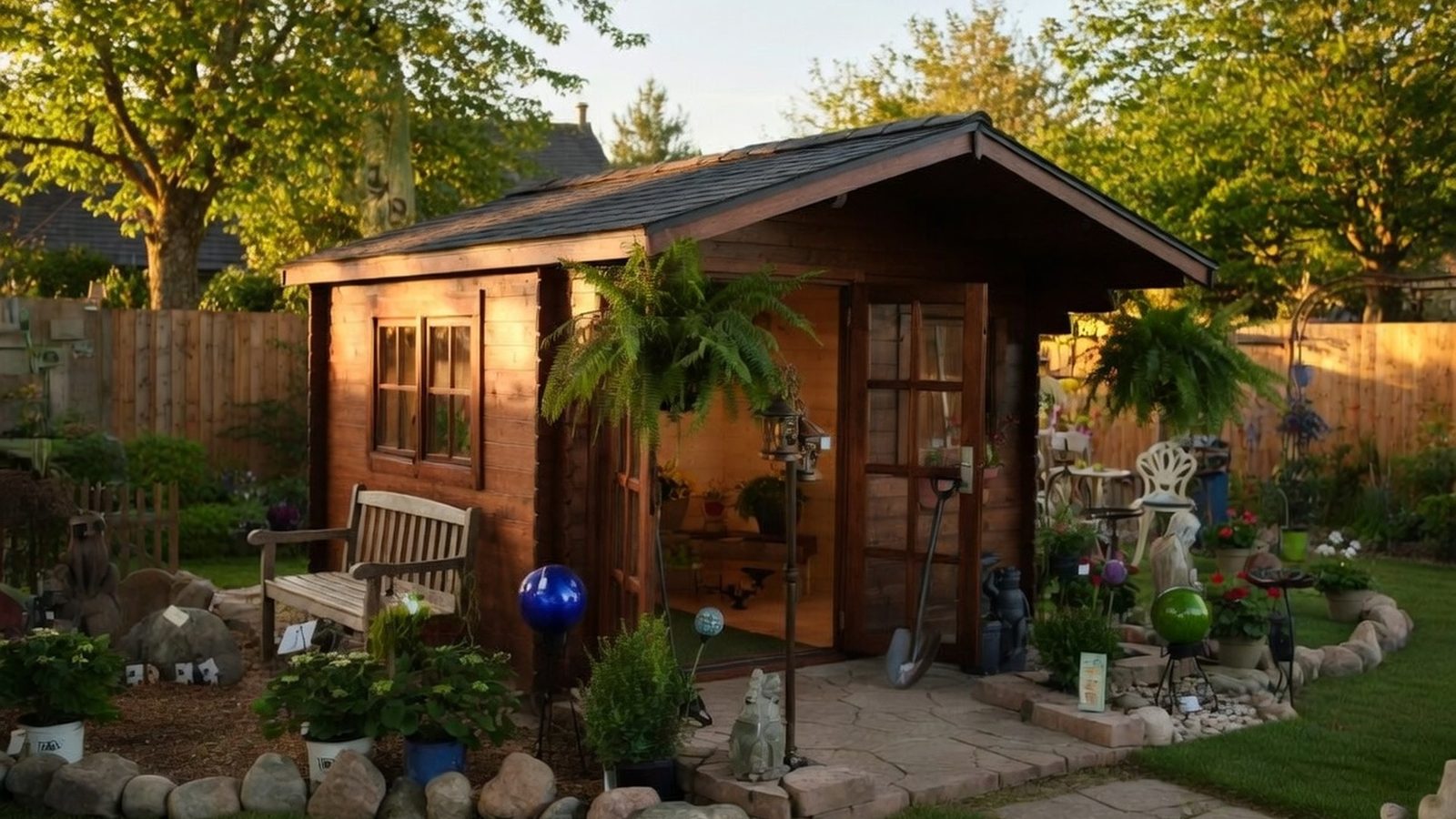
The aesthetics buyer. You want a beautiful structure in your garden. You've been pinning photos for months or years. The shed is part of a larger vision for how your backyard should feel. You'll pay for quality but you will not accept something that looks cheap. Cedar speaks to you because it's warm, natural, photogenic, and it ages in a way that feels organic rather than industrial. If this is you, cedar can be a wonderful choice — but only if you go in with clear eyes about the maintenance commitment. The cedar you saw in the catalog was stained within thirty days of assembly and has probably been restained every three to five years since. Your cedar will look like the catalog only if yours is treated the same way.
The she-shed or backyard retreat buyer. You're not buying storage — you're buying a personal space. A reading nook, a craft room, a yoga room, a writing studio. The aesthetic is non-negotiable: natural wood, possibly with a porch, definitely with windows. Cedar is deeply embedded in this vision because the culture of the she-shed grew up alongside the cedar shed. If this is you, cedar's emotional fit is real and the thing to check carefully is whether the standard kit construction will actually handle the kind of use you have in mind. Standard cedar kits are not designed as conditioned space. If you want heat, air conditioning, insulation, or drywall interiors, you are going to be fighting the product's DNA, and the fight gets expensive.
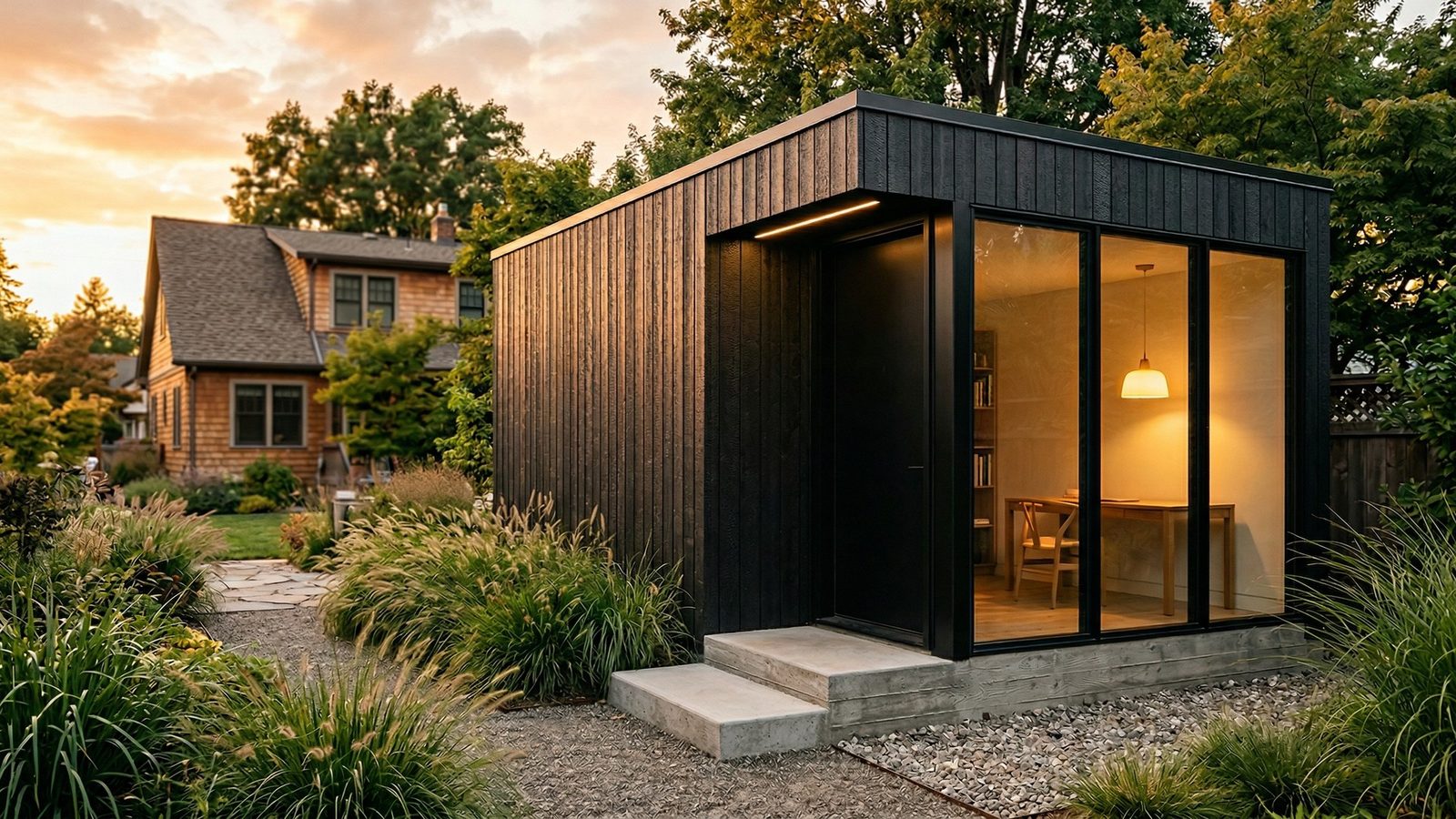
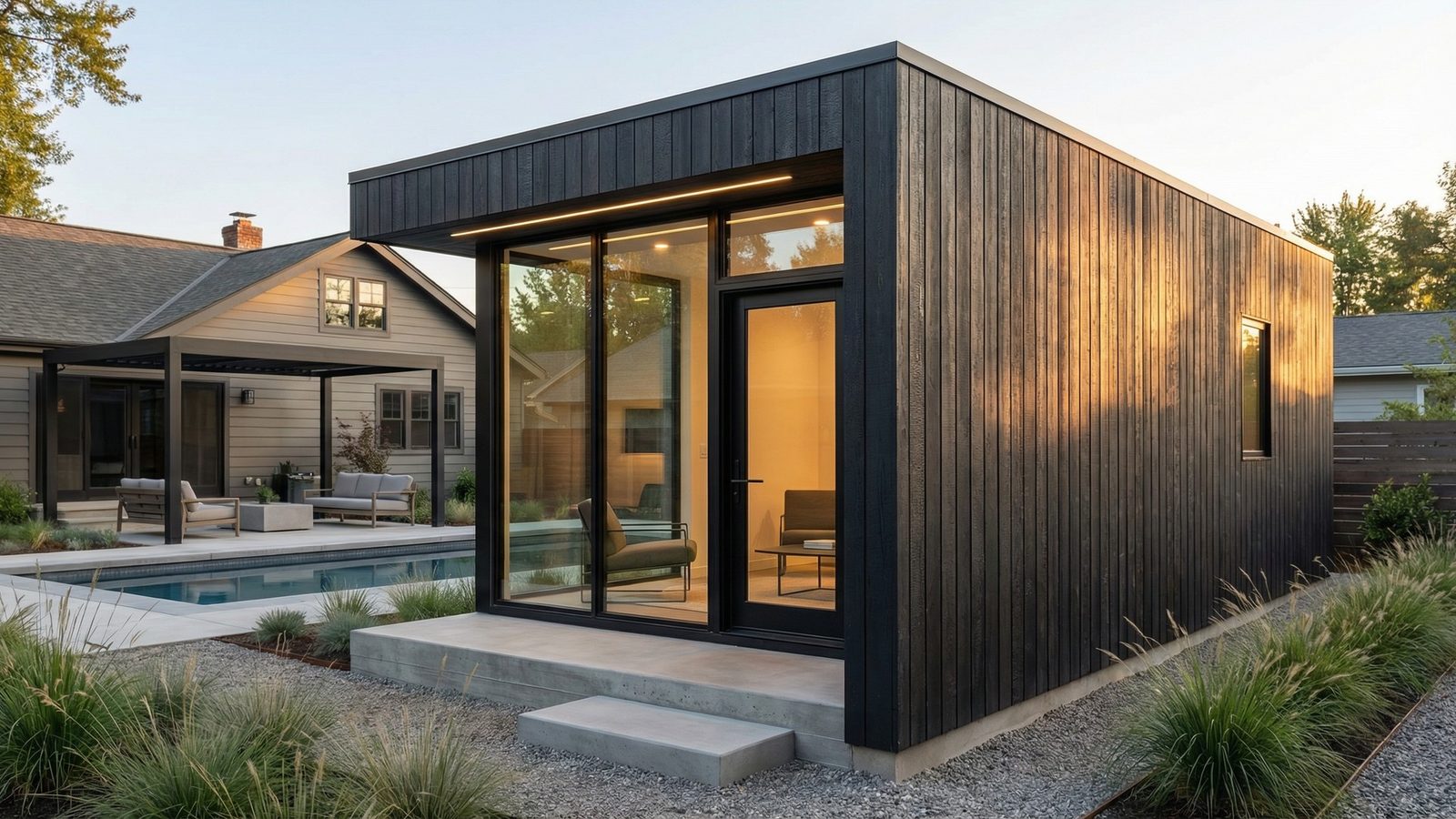
The backyard office buyer. You need separation from the house to work. You searched "cedar shed" because of how they look, but you quickly discovered that standard cedar shed kits are not designed for insulation, electrical, or HVAC. This is the camp where cedar most frequently disappoints. The thin cedar siding, the 2x3 framing, and the lack of any integrated vapor barrier or sheathing mean that converting a standard cedar kit into a proper workspace requires you to essentially build a second building inside the first one — new studs, new insulation, new interior walls, new vapor management. If you are in this camp, read our dedicated backyard office guide before you commit to cedar. You are probably better served by a different category.
Cedar grades: what you're actually buying
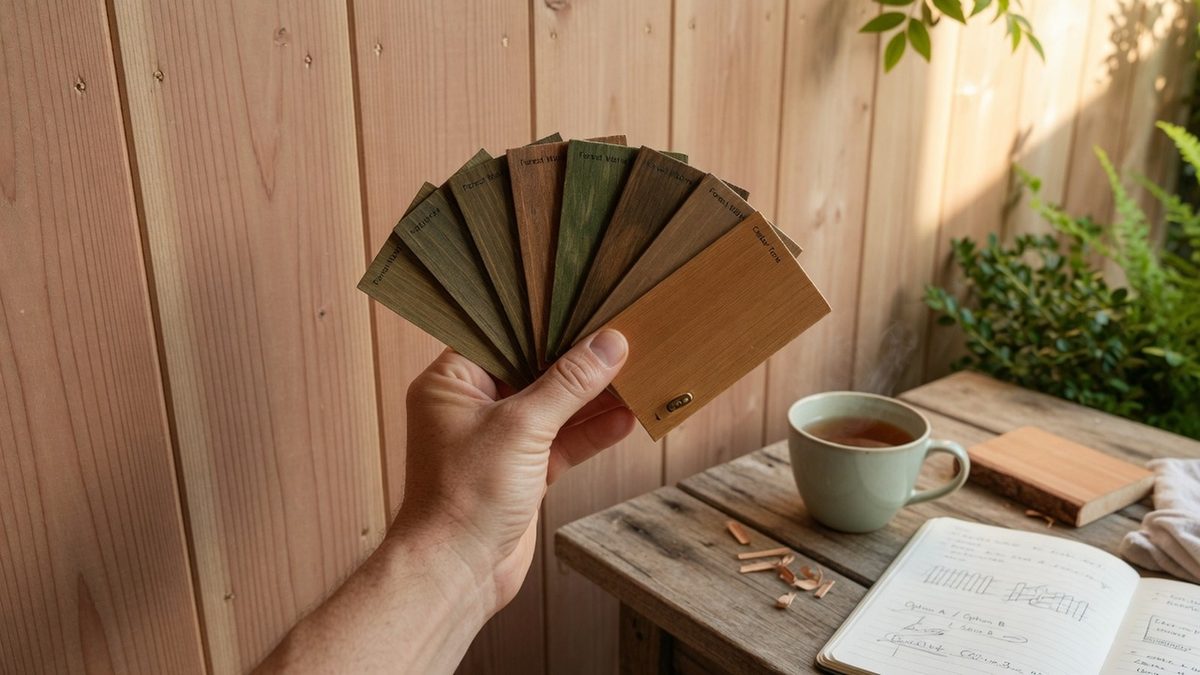
This is the part of cedar buying almost nobody explains, and it matters because the word "cedar" on a catalog page can describe wood at eight wildly different quality levels. Cedar is graded from the top down roughly like this:
At the top there's Clear Vertical Grain — growth rings running parallel to the face of the board, smooth heartwood, maximum dimensional stability, and a price that will make your eyes water. Clear VG is what you see in high-end architectural magazines. It is almost never used in shed kits. Below that sits Clear Heart, which is exposed heartwood only, kiln-dried, used in premium siding and doors. Also almost never in shed kits. A Clear and C&Btr Clear are the grades used in premium residential siding and cabinetry. Still very rare in shed kits.
Most cedar shed kits in the $2,000 to $9,000 range actually use Select Knotty or Quality Knotty cedar. These are real cedar, properly graded, perfectly suitable for outdoor applications, but they allow visible knots, small holes, and more natural characteristics than the catalog photography usually suggests. The photography in kit catalogs is usually tightly controlled — the best-looking boards on a freshly-built, freshly-stained unit in ideal light. Your kit will not look exactly like the photo, and the difference isn't because the manufacturer lied, it's because "cedar siding" legitimately covers a range.
This matters when you're comparing prices. A kit that seems suspiciously cheap might be using Quality Knotty at the lower end of the grade, and a kit that seems expensive might be using a tighter grade. Ask the manufacturer before you buy: what grade of Western Red Cedar is on the exterior of this kit? A reputable seller will answer clearly. A seller who dodges the question is telling you something useful.
The one thing every cedar buyer should understand: it will turn gray
This is the single most important thing to know about cedar ownership, and it's the thing that surprises first-time buyers most.
Left untreated, Western Red Cedar weathers to a silver-gray patina. UV light attacks the lignin in the surface cells. Moisture penetrates the opened cells. The warm honey-brown tones you saw on Pinterest fade into a soft silver that some buyers find beautiful and most buyers find "tired." The wood isn't rotting — it's weathering — but the emotional experience of watching your gorgeous eight-thousand-dollar shed go gray within the first year is, for most people, a real shock.
How fast it happens depends almost entirely on where you live:
- Pacific Northwest — Three to four years before significant graying. This is cedar's native habitat, and the climate that grew the trees is the same climate that preserves them when they become sheds. If you're in Seattle, Portland, or coastal British Columbia, you have the longest runway.
- Northeast and Midwest / Great Lakes — Twelve to eighteen months. Freeze-thaw cycling, wet springs, humid summers, and meaningful UV combine to accelerate everything. A cedar shed installed in Chicago in May will start visibly graying by the following fall.
- Southeast and Gulf Coast — Six to twelve months. The combination of heat, humidity, and UV is the most aggressive environment cedar faces. Texas especially is documented as producing visible graying within the first six months for untreated cedar.
- Desert Southwest — Fair performance, but UV intensity causes rapid drying, checking (small cracks along the grain), and graying within one to two years. The dry air that seems protective actually dehydrates the wood.
- Coastal anywhere — Faster than inland at the same latitude. Salt air accelerates both the graying and the decay of the steel fasteners holding the cedar in place.
The decision you have to make before your cedar shed is even assembled is which of three maintenance philosophies you're going to live with:
Philosophy 1: Embrace the gray. Let the cedar weather naturally to silver. This is the lowest-maintenance approach and the most authentic to cedar's natural lifecycle. It is also the approach most people think they'll be happy with until they see it, at which point a significant percentage change their minds. If you can walk past a four-year-old untreated cedar fence and honestly say "I love how that looks," this is a valid path. If you hesitate at all, it's not.
Philosophy 2: Stain and maintain on a cycle. Apply an oil-based penetrating stain within thirty days of assembly. Reapply every three to five years depending on climate. This preserves the warm brown tones and is what most of the Pinterest photos you're drawn to actually represent. It's also the commitment a lot of buyers don't fully understand they're making. For a 12x16 shed with about 500 square feet of exterior surface, one professional re-stain costs somewhere between $1,000 and $2,500, depending on your region, the stain used, and how much prep the shed needs. Over twenty years with four or five re-staining cycles, you're looking at $5,000 to $13,000 in maintenance — on top of the original kit price.
Philosophy 3: Clear sealer only, refreshed annually. A clear water-repellent sealer lets the cedar tone show through without adding pigment. Cheaper per coat but needs reapplication every eight to twelve months rather than every three to five years. Over twenty years the labor commitment is actually higher than the full-stain approach, which is why most long-term cedar owners eventually abandon it.
None of these are wrong. But they are commitments, and the marketing rarely explains that the beautiful honey-brown cedar in the catalog is not cedar's natural state — it's cedar under active maintenance. Going into the purchase knowing which philosophy fits your life is probably the single highest-leverage decision you'll make.
The hidden fastener problem
Here's a small thing that turns into a big thing: cedar's high tannin content reacts chemically with ordinary steel screws and nails, producing dark black staining that runs down the face of the wood and, over years, looks awful. Zinc-coated fasteners are worse — the zinc reacts with cedar tannins and can actually accelerate localized decay around the fastener head. Aluminum is fine but structurally weaker than you want for load-bearing connections. The only correct answer for cedar construction is stainless steel fasteners throughout, and stainless steel fasteners are three to five times the price of regular deck screws.
Most cedar shed kits come with regular hardware. Some come with galvanized. A small number come with stainless. None of them tell you clearly in the product listing which one you're getting. The cost difference to upgrade to stainless on a kit-size shed is usually $50 to $150 — cheap insurance — but you have to know to ask for it, and a stunning number of buyers don't find out until the staining starts.
If you take nothing else from this article, take this: when you buy your cedar kit, ask what hardware is included, and if it isn't stainless, buy stainless and throw the other stuff away. Your year-five self will thank you.
The real total cost of a cedar shed in 2026
Cedar shed buyers who focus on the kit price routinely underestimate the total project cost by 40 to 80 percent. The gap between "I'll spend five grand on a cedar shed" and what actually shows up on the credit card statement over the first year creates more post-purchase regret than any other single factor in this category.
Here's an honest total for a 10x12 cedar shed bought from a mid-range Canadian manufacturer in 2026, based on the current tariff and pricing environment:
- Kit price — $3,500 to $5,500. This is the number you see on the website.
- Foundation — $400 to $800 for a pressure-treated skid-on-gravel pad, or $1,500 to $3,500 for a proper poured concrete slab. Cedar is light but it still needs a level, drained base or the floor will sit in moisture and rot.
- Delivery — sometimes included in the kit price, sometimes $200 to $400 extra, occasionally more if you're not near a major freight corridor.
- U.S. customs clearance — $150 to $500 for any kit shipped from Canada, which includes all three major brands. You will be asked for your Social Security Number or an EIN. This is not optional.
- Stainless steel hardware upgrade — $50 to $150.
- Initial stain and seal treatment — $150 to $400 in materials if you do it yourself, two to four times that if you hire it out. This should be done within thirty days of assembly.
- Roofing shingles — $200 to $500, because most cedar kits ship with plywood roof decking but not the shingles on top.
- Assembly — free if you do it yourself (2–4 days of work for most kits), or $600 to $1,500 if you hire two people for two days.
- Permits — usually zero for kit sheds under 200 square feet, but in some jurisdictions up to $400.
Realistic all-in range: $4,850 at the low end, $13,550 at the high end, for a shed whose kit price was $3,500. The gap between "what the price tag said" and "what it actually cost" is real, and it's the single most common source of cedar-shed regret that shows up in long-form reviews.
And that's just year one. The twenty-year total cost of ownership — kit plus foundation plus customs plus four or five re-staining cycles plus occasional board replacement plus hardware — typically lands somewhere between $12,000 and $18,000 for a 10x12 cedar shed. Which is a number worth holding in your head when you compare cedar to other wood options.
The 2025–2026 tariff reality
This is the part of the cedar conversation that's changed dramatically in the last eighteen months, and a lot of the older cedar shed reviews and buying guides you'll find online simply don't reflect it.
The three dominant cedar shed manufacturers — Cedarshed Industries, Outdoor Living Today, and Summerwood Products — are all Canadian companies. Cedarshed is in British Columbia, Outdoor Living Today is in British Columbia, Summerwood is in Ontario. Every kit they ship into the U.S. now crosses a tariff wall that in early 2024 was about 8 percent and today sits at roughly 45 percent on the softwood lumber content. The math is:
- Pre-2024: Anti-dumping and countervailing duties around 8 percent
- August 2024: Fifth administrative review finalizes duties at 14.5 percent
- Summer 2025: Commerce Department's sixth review roughly doubles the rate to 35 percent
- October 14, 2025: A Section 232 tariff adds another 10 percent on top, bringing the effective rate on Canadian softwood lumber to approximately 45 percent
What this means in practice is that every Canadian cedar kit shipped into the U.S. today carries a cost structure that is significantly higher than it was two years ago. Manufacturers are absorbing some of that margin and passing some of it to buyers. If you see a 2023 price on a cedar shed blog post, add 15 to 25 percent to get to the 2026 reality.
This isn't a reason to avoid Canadian cedar kits. The product is the product and Cedarshed especially is a well-known brand with a long history. But it is a reason to (a) understand that the pricing environment has shifted, (b) build the customs clearance and broker fees into your budget from the start, and (c) consider U.S.-based alternatives if tariff exposure matters to you. Jamaica Cottage Shop in Vermont builds beautiful U.S.-made wood sheds (though in Eastern White Pine and Hemlock, not cedar). A few smaller U.S. operators build in cedar siding on domestically-sourced lumber. And there are log and timber sheds — we cover those in a separate guide — that avoid the cedar category entirely while still delivering a real-wood aesthetic.
The 12-year ownership arc
Here is what cedar shed ownership actually looks like for most buyers, compressed into a timeline. Your mileage will vary, but if enough cedar owners looked at this they'd nod at most of it.
Month 0 — Assembly. The wood is honey-brown, the smell is incredible, the kit is beautiful, and you are deeply happy. You consider whether to stain right away or "let it breathe for a few weeks." If you let it breathe, you already regret it.
Months 1 to 3 — Honeymoon. Friends and neighbors admire it. You post photos. You open the door just to smell the inside. This is the cedar experience the catalogs promise, and it's real.
Months 4 to 12 — First shift. Depending on your climate, the color starts to change. In Chicago or New York or Atlanta, the south-facing wall is noticeably less warm than the north-facing wall by month eight. You tell yourself it's "weathering beautifully." Privately, you look at the catalog photo on your phone and the new reality and you feel a small pang.
Year 2 — First maintenance decision. You either stain the shed or you don't. If you stain, you spend a weekend and $200 to $400 in materials, or a day and $1,500 in labor. The shed looks great again. If you don't stain, the gray patina settles in and you try to convince yourself you like it.
Years 3 to 5 — First real re-stain cycle. If you stained in year two, you're due again. The fastener staining from any non-stainless hardware is now visible. A few boards show minor cupping, especially on the south-facing wall. You discover that some of the 2x3 framing has developed a little movement, and the door is slightly harder to close than it was.
Years 5 to 8 — First real maintenance bill. The shingles (which most kits don't include) need attention. A couple of siding boards need replacement if water has been finding a way behind them. If you're hiring out, you're spending $1,500 to $3,000 in one hit on a cedar refresh.
Years 8 to 12 — The decision point. You've spent more on maintenance than you expected. The shed still looks good if you've kept up with it, or fairly tired if you haven't. You are making a quiet judgment: was this worth it? For buyers in the Pacific Northwest, the answer is usually yes. For buyers in Texas or Florida, the answer is frequently no. For buyers in the Midwest and Northeast, it's a real coin toss that mostly comes down to how much you loved the look in the first place.
Year 15 and beyond. Cedar sheds that have been maintained can absolutely hit 25 to 30 years of service and still look beautiful. Cedar sheds that haven't been maintained start showing structural issues — rot at floor joists, failing roof decking, splitting siding at the ends — somewhere between year 12 and year 18, depending on climate.
None of this is catastrophic. Plenty of cedar sheds give their owners twenty years of real joy. But the story is not "install it and forget it." It's "commit to a relationship with a wooden structure for as long as you want it to look the way you bought it for."
Top five regrets of cedar shed owners
Across every forum thread and long-form review we've looked at, the same five regrets come up again and again. Knowing them up front lets you avoid them.
1. "I didn't stain it fast enough." The window is thirty days from assembly. Buyers who wait past that window almost always wish they hadn't, because the UV damage starts immediately and you're chasing it from then on.
2. "I wish I'd gone bigger." This is not specific to cedar — it's universal across shed categories — but it's especially painful for cedar buyers because the jump from a 10x10 to a 10x12 is maybe $800 and the jump to a 10x14 is maybe $1,500. Compared to the $5,000+ you're already spending, the "bigger" option is almost always worth it, and almost nobody regrets going bigger.
Run your own numbers: Use our free From-Scratch Cost Calculator to estimate a full DIY build, or the Kit Cost Calculator if you're buying a prefab kit.
3. "I didn't realize how much maintenance this was going to be." Some people love the weekend ritual of restaining. Some people resent it. Know which one you are before you buy, not after.
4. "I wish I'd sprung for stainless hardware." See the fastener section above. The fastener staining shows up by year three and is essentially impossible to remove without sanding the siding, which is a much bigger project than just using the right screws in the first place.
5. "I wish I'd understood the framing was SPF, not cedar." This usually comes up when someone tries to convert the shed to an office or workshop and discovers that the thin 2x3 framing isn't ideal for what they want to do. Not a fatal flaw, but a surprise.
The cedar brand landscape, honestly
Here's the competitive landscape, laid out plainly:
Cedarshed Industries (Spallumcheen, BC, Canada) is the default reference brand. Distributed through Home Depot and Wayfair as well as direct. Extensive range from small lean-to storage to larger cottage-style structures. Pricing runs from about $2,000 at the entry lean-to level up to around $12,000 for the large Farmhouse model. Framing is 2x3 SPF. Warranty is one year, with a fourteen-day notification window for damaged or missing parts upon delivery — the tightest window in the industry and a documented source of frustration in reviews. Lead times average three to four weeks, longer in peak season. Requires customs clearance and your SSN or EIN.
Outdoor Living Today (Penticton, BC, Canada) competes directly with Cedarshed on price and product range and is generally considered the better buy on warranty and assembly instructions. Three-year limited warranty on rot and decay (effective April 2024), thirty-day notification window for damaged parts. Financing options including Pay-in-4 and 24-month plans. Same underlying construction as Cedarshed — cedar siding on SPF framing — and the same tariff exposure as a Canadian manufacturer. If you're choosing between Cedarshed and OLT for a similar-sized kit, OLT is the friendlier choice for most buyers.
Summerwood Products (Toronto, Ontario, Canada) is the luxury tier. Summerwood targets the custom, high-end market with extensive options and even pre-assembled delivery on some models. Pricing runs from about $4,600 for a small pre-cut kit up into the $25,000 to $95,000 range for large pre-assembled cottages. Beautiful photography, premium positioning, and mixed reviews on assembly instructions — multiple customers have reported instructions being "nowhere near enough" and ending up spending far more on hired labor than they budgeted.
Jamaica Cottage Shop (Vermont, USA) is the main non-cedar alternative worth naming in this category because they occupy the "premium wood shed from a U.S. company" slot. They build in Eastern White Pine and Hemlock rather than Western Red Cedar, but they offer cedar shakes and shingles as roofing upgrades, they ship assembled for many models, and they avoid every Canadian tariff and customs issue entirely. If you want a U.S.-made premium wood shed and the New England aesthetic works for your backyard, Jamaica Cottage Shop is worth a serious look.
Studio Shed (Colorado, USA) makes modern modular prefab sheds with cement-board siding rather than cedar. Pricing starts around $12,000 and goes up fast. If your aesthetic is more "contemporary backyard office" than "traditional garden cottage," Studio Shed is in a different but adjacent category.
Modern-Shed, Oban Cabin, EZ-Fit Sheds, Little Cottage Company, and several regional Amish builders round out the edges of this market. Little Cottage Company especially is worth mentioning because they use LP SmartSide — an engineered wood siding that's the closest thing to a "set it and forget it" alternative to cedar. Engineered wood doesn't have the same romance, but it solves most of cedar's maintenance problems and carries a fifty-year warranty that cedar manufacturers couldn't dream of matching.
When cedar is genuinely the right call
You are in the Pacific Northwest or a climate genuinely close to it, and cedar is going to perform the way the marketing suggests.
You are an aesthetics-first buyer and you have walked past a five-year-old maintained cedar shed in person — not in a photo — and said out loud "I want that." The ones who have done the in-person inspection are the ones who stay happy.
You are committed to the maintenance cycle, not grudging about it. A significant number of cedar owners enjoy the staining ritual — it's a weekend outdoors with a specific, satisfying task and a visible improvement at the end. If that description fits you, you are the person who should own a cedar shed.
You are willing to upgrade the hardware to stainless from day one, and you have budgeted the total cost of ownership honestly rather than the kit price.
You are not planning to convert the shed to a conditioned office, gym, or living space. Cedar kits are for what they look like, not for what you can retrofit them into.
When to walk away from cedar
You are in Texas, Florida, Arizona, or anywhere with aggressive UV and humidity. The maintenance curve bends against you hard and the result is almost never worth it.
You bought the shed for a workshop, office, gym, or studio and you need insulation, electrical, vapor management, or conditioned space. Cedar kits are not the right starting point.
You are primarily price-sensitive. At the true total cost of ownership, cedar is among the most expensive shed categories on a 20-year basis. If budget is the primary filter, look at wooden sheds with engineered siding (LP SmartSide), at premium plastic/resin (for low maintenance), or at metal with a quality gauge (for pure storage).
You cannot or will not commit to the staining cycle. Unstained cedar becomes gray cedar and gray cedar is fine if you genuinely love the look, but buying cedar with the plan to "let it weather naturally" and then regretting the gray is one of the most common patterns in the category.
You are uncomfortable providing your SSN or EIN to a customs broker for a Canadian import. This is a real requirement for Cedarshed, OLT, and Summerwood, and some buyers simply don't want to deal with it. U.S.-based alternatives exist.
Questions to ask before you buy
- What grade of Western Red Cedar is on the exterior? (Look for Select Knotty or better. Anything called "Quality Knotty" or unlabeled is the bottom of the range.)
- What is the wall framing material and dimension? (Expect 2x3 SPF from Cedarshed and OLT. Summerwood uses spruce. Ask. Don't assume.)
- What hardware is included, and is it stainless? (If not stainless, budget to upgrade.)
- What is the warranty, and what is the notification window for damaged or missing parts on delivery? (Fourteen days is aggressive. Thirty days is fair.)
- Are roofing shingles included? (Often no.)
- What is the current lead time, in your current season? (Expect three to six weeks from Canadian brands.)
- What are the customs clearance requirements and the broker fee estimate? (If you're buying from Canada, you need this number before you commit.)
- What finishing is recommended by the manufacturer, on what schedule? (A good manufacturer will have a clear, honest answer. A poor one will be vague.)
- What is the realistic assembly time for two people with basic DIY skills? (Ask for hours, not days.)
- Can I see unretouched photos of a five-year-old example of this specific kit? (A confident seller will have them. A seller who doesn't is telling you something.)
The bottom line
Cedar is the most romantic shed material on the market, and the romance is partially earned and partially marketed. Cedar is a wonderful choice for Pacific Northwest buyers, for aesthetics-first buyers who understand the maintenance commitment, and for anyone who genuinely enjoys the staining ritual. Cedar is the wrong choice for buyers in hot and humid climates, for workshop or office conversions, for price-sensitive buyers on a total-cost-of-ownership basis, and for anyone who was hoping to "install and forget." The honest truth is that cedar is less about owning a shed and more about owning a relationship with a wooden structure — and that's a fine thing to want, as long as you know it's what you're signing up for.
When you're ready to explore other directions, read our other deep-dive guides: Wooden Sheds (the 2x4 + T1-11 category, cedar's closest mass-market cousin), Plastic/Resin Sheds (the low-maintenance opposite of cedar), Metal/Steel Sheds (cheap, secure, and honest about what they are), and Log & Timber Sheds (the "solid wall instead of frame and siding" alternative).
And whatever you choose — go bigger than you think you need. That's the one regret every shed owner shares, and cedar buyers share it most of all.